.png)
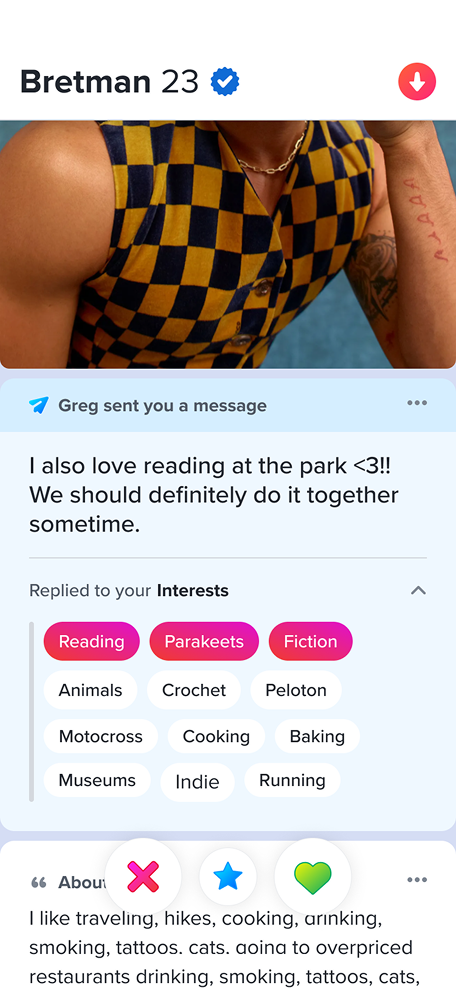
Meet First Impressions™—formerly Swipe Note. We reimagined a way to spark real connection—letting users reply to specific profile prompts instead of generic profile messages. By weaving context into every interaction, we turned a one-off gesture into a memorable, conversation-starter experience that boosts matches.
Team
Growth & Revenue
Focus
Premium Experiences
Duration
3 Months
Contributions
Strategy, UX Design, Visual Design, Prototyping
Results: Driving Engagement & Revenue
at Scale
We've seen large gains across key revenue streams, and the data highlights the value this initiative has brought to the business.
ALC Cash
+5.9%
Gold Total Cash
+0.7%
Total Cash
+4.4%
Match Rate
+25%
First Impressions before
Before becoming First Impressions, Swipe Note only allowed users to send a message to the general profile—not to specific profile content—making messages feel generic and disconnected.
Also, it was exclusive to Gold/Platinum subscribers in which users had to attach a message to a Super Like, but the experience was clunky and underwhelming. The entry point was buried, the value was unclear, and the lack of context made it harder for senders to know what to say—and for receivers to care.

What the Data and Users Told us:
On Tinder, most matches never led to real conversations. Internal data showed that over 60% of matches resulted in no messages exchanged, and user feedback consistently pointed to a lack of confidence or clarity around how to start.
We had features designed for high-intent engagement—like Super Likes and Swipe Notes—but they weren’t delivering. Users weren’t using them, and when they did, the experience fell flat:
-
✍️ Blank-slate anxiety: Users didn’t know what to say and found it hard to reference anything specific in the profile while composing a message.
-
🧭 Poor discoverability: Swipe Note was only accessible after sending a Super Like or via the little-used “My Likes” tab—making it easy to miss.
-
📉 Friction killed usage: Earlier tests showed the two-step Swipe Note flow led to a sharp decline in Super Likes sent, especially among new users.
-
🧊 Low emotional resonance: Messages felt generic and disconnected from the profile, reducing their perceived value.
From the receiver side—especially women—the feedback echoed this sentiment. Messages were often seen as lazy, impersonal, or even intrusive. Without clear context or thoughtful content, Swipe Notes didn’t feel special—they felt spammy.
Together, the data and insights pointed to a clear need: a more intuitive, contextual, and emotionally resonant way to express intent and start meaningful conversations.
“If someone actually said something about my profile, I’d probably reply.”
— Tinder user during co-creation session
Opportunity
We saw a clear opportunity: users wanted to comment on specific profile elements—like a funny prompt, shared hobby, or music choice—but had no way to do that naturally.
By enabling contextual replies to profile content, we could:
-
Reduce blank-slate pressure and make messaging feel effortless
-
Help users stand out in a sea of swipes
-
Make receivers feel seen, increasing reply rates
-
Monetize intent more effectively via ALC and Super Likes

My Role
I owned the design of contextual reply experience overall, within our three-designer team, designing the content experience inside the extended profile, and contextual reply entry points. I aimed to make receiving and sending a message feel lightweight, clean, personal, and high-value.
